Analysis
Whose words does the court hear?
The Pelkey video joined a family's interpretation to a deceased person's face and voice. The legal problem survived its disclosure.
- Evidence
- Governance
- Criminal exposure
At a glance
- Disclosing a synthetic origin did not cure the attribution error found in this case.
- The court affirmed the conviction and vacated the manslaughter sentence.
- The opinion found that the video played a role, without determining how it affected the sentence.
Christopher Pelkey did not give the statement that appeared to come from him at Gabriel Horcasitas’s sentencing. His sister, Stacey Wales, had written words for a synthetic likeness of her deceased brother to deliver. The presentation disclosed that it was made with AI. The sentencing judge praised the performance and described its forgiveness as genuine. The Court of Appeals read his response as attributing that forgiveness to Pelkey himself.1
On September 30, 2026, the Arizona Court of Appeals affirmed Horcasitas’s manslaughter conviction, vacated the manslaughter sentence and remanded for resentencing. Because Horcasitas had not objected at sentencing, the court reviewed for fundamental error. In State v. Horcasitas, No. 1 CA-CR 25-0191, paragraphs 34, 50–54 (Ariz. Ct. App. Sept. 30, 2026), it held that the synthetic presentation was unreliable and that the judge’s consideration of it made sentencing fundamentally unfair. The embedded authentic footage remained permissible. What failed was the attribution of newly created speech and expressions to someone who had never performed them.2
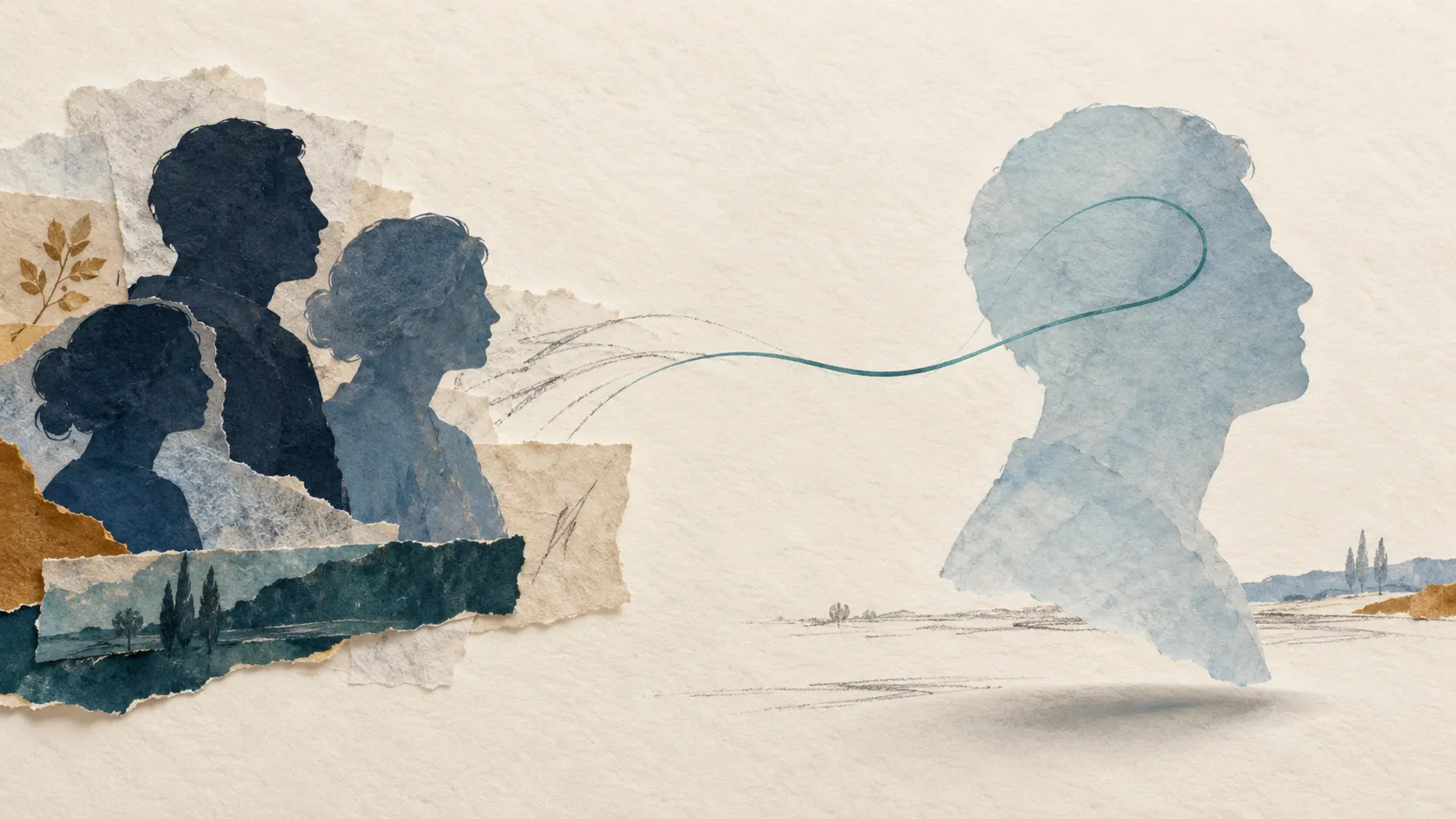
That distinction should guide the courtroom discussion. A family can have a sincere account of the person it lost, a lawful right to speak and a permitted digital format. Those facts do not make its interpretation the deceased person’s own statement. The important question is what the presentation asks the court to accept, and on whose authority.
A family’s interpretation, performed as someone else’s words
The family’s purpose deserves to be taken seriously. In an October 5 CNN interview, Wales said her script reflected beliefs supported by Pelkey’s recordings and writings, including forgiveness and faith. She also disputed the suggestion that the judge had based his decision solely on the AI video, describing it as part of a much larger presentation about her brother. These are her explanations of the work and the hearing, rather than independent proof of every event she described.3
The production was a human undertaking using synthetic performance. NPR’s report of Wales’s account described her script, a photograph, an existing video of Pelkey and work by her husband, Tim, and Scott Yentzer. The report included digital changes to his image and difficulty recreating laughter. Wales described the process as helping her cope with her loss. That reported experience is a reason to understand the project empathetically; it does not establish a clinical benefit or the accuracy of each generated expression.4
The opinion describes a presentation that combined different kinds of material. Pelkey’s brother read an actual statement Pelkey had written. Wales then explained that she imagined what her brother would say if he could take her place. The video introduced its likeness as recreated through AI, included authentic footage of Pelkey discussing his beliefs, and returned to the synthetic speaker, who addressed the court and Horcasitas.5
Those components had different authors and different evidentiary foundations. A recording could show what Pelkey said when it was made. His writing could show what he had written. Wales’s script expressed her interpretation of how he would respond to a proceeding after his death. Placing those words in his apparent mouth did not supply the missing act of speaking, however consistent she believed they were with his character.
This is also why the problem is larger than an invented factual detail in a script. The Court of Appeals included facial expressions and other nonverbal communication in its attribution analysis. The presentation supplied a performed response, not merely a sentence for the judge to read. Its resemblance to Pelkey could make the family’s interpretation appear to carry the authority of Pelkey’s own words and manner.6
The concern about that borrowed authority is already present in scholarship. Before the appellate decision, Graham Meikle and Johanna Sumiala examined the Pelkey video as one example of synthetic representations giving the dead an apparent role in contemporary disputes. This article’s narrower question is what follows when a court must decide which assertions it may use to impose punishment.7
Digital media is permitted. Reliable attribution still matters
Arizona law gives victims substantial room to address the court. Arizona Revised Statutes section 13-4426(A)–(B) permits evidence, information and opinions concerning the criminal offense, the defendant, the sentence or the need for restitution, and a right to address the court at a disposition proceeding. Section 13-4428(B), subject to its exception for in-custody victims, expressly allows a statement through an audio or video recording or other digital media. Section 13-4426.01 says that the victim speaks as a non-witness, without cross-examination or prior disclosure, while preserving an opportunity for the prosecution and defense to explain, support or deny the statement.8
These provisions answer real objections to treating every victim presentation like sworn trial testimony. Participation can include personal interpretation and emotional expression. An unusual medium does not automatically remove it from the statute’s protection. A proposal that makes advance disclosure or cross-examination a universal condition of speaking would have to confront those express protections.
The strongest defense of this video follows from that framework. As the opinion describes the State’s position, Wales knew her brother closely, the sentiments probably reflected his values, and they were consistent with his actual writing. The artificial origin was disclosed. That adds a further objection to exclusion: why should a family lose an expressive medium simply because it communicates its account more vividly?9
The court’s answer concerned reliability and fair procedure. Sentencing allows a broader range of information than a trial, including reliable, relevant hearsay under Arizona Criminal Rule 26.7(b)(2). But Horcasitas explains that this procedural flexibility retains a due-process floor. The family could speak about its loss; the court still had to decide whether the particular presentation crossed the line into an unfair sentencing process.10
The distinction did not depend on finding that Wales lacked affection for Pelkey or misunderstood his faith. Agreement between an invented response and existing beliefs is a basis for an interpretation, not verification that the response is his. The opinion rejected the synthetic video’s replacement of that interpretive relationship with apparently direct speech. That is a narrower and more defensible objection than assuming that emotionally powerful presentations are always improper.11
Disclosure did not resolve it. The audience could know the performance was synthetic while still treating the depicted person’s forgiveness as his own contribution to the proceeding. The opinion found precisely that problem in the presentation and the judge’s response. Its conclusion that no disclaimer could cure this error should be read against those features, rather than converted into a rule that disclosure is useless in every courtroom AI application.12
A finding of reliance, not a measure of added prison time
The original sentencing order confirms a May 1, 2025 hearing and a presumptive manslaughter term of 10.5 years, with a concurrent 2.25-year endangerment term. The order was filed May 2. In the appeal, the manslaughter sentence was the sentence vacated. Keeping the two counts and the hearing and filing dates separate avoids making the remedy broader than it was.13
The 10.5-year term was also the ceiling available in these circumstances because the State had alleged no aggravating factors. The opinion records that the prosecution requested nine years, defense counsel requested seven, and the family’s attorney asked the judge to treat victim impact as rebuttal to mitigation and impose the maximum authorized by the verdict. The State also sought a consecutive two-year endangerment term, bringing its total request to eleven years; the court imposed concurrent terms totaling 10.5 years. Neither comparison estimates what the video added.14
The judge’s explanation gives the opposing argument more force. He thanked the family for allowing Pelkey to speak from his heart “as you saw it” and said he had not heard Pelkey asking for the maximum sentence. The qualifier suggests an awareness of the family’s interpretation, and forgiveness could favor leniency. Defense counsel called the speaker a “likeness” and endorsed its suggestion that the two men could have been friends. The judge’s stated reason for the presumptive term concerned the family’s loss more broadly. Those remarks complicate any claim that the video increased the punishment.15
The Court of Appeals nevertheless found that the video played a role, while expressly acknowledging that the record did not show precisely how it entered the calculation. Its due-process analysis protected the character of the sentencing procedure, even where the defendant could not object to a particular result. The court’s answer to the prejudice question was therefore a finding of unreliable attribution and unfair procedure on this record, rather than proof of a particular increase in prison time. That reasoning supports the remedy while leaving the effect’s direction and magnitude unresolved.15
Nor does the case show that a trial jury was misled by the avatar. The video was presented after the verdict to the sentencing judge. It demonstrates a failure in that judge’s treatment of this presentation. Claims about how often judges or jurors make the same attribution, or how large the resulting effect would be, require different evidence.
Experimental studies help frame that uncertainty without settling it. Clark and Lewandowsky found continuing influence after warnings in online experiments involving fictional confessions, while acknowledging ambiguity in how participants understood the task. Skorinko and colleagues tested written victim-impact statements with mock jurors, rather than synthetic delivery. Neither study measures the effect of this avatar on an actual sentencing judge or supplies a number for additional prison time.16
The same likeness can ask different legal questions
At a trial, a synthetic depiction offered to prove what a person actually said would raise a different set of questions from a family account at sentencing. Arizona Evidence Rule 901(a) requires evidence sufficient to support a finding that an item is what its proponent claims it is. Proof that a file is a faithful copy of a family-produced video could authenticate that file. It would not, by itself, establish that the deceased person spoke or adopted the generated words.17
Changing the label to an illustrative aid would not end the inquiry either. Arizona Rule 107 allows an aid to help explain evidence or argument, subject to its own balancing test, and ordinarily keeps it out of jury deliberations. Rule 403 separately addresses exclusion of evidence whose probative value is substantially outweighed by specified dangers, including unfair prejudice and misleading the jury. The intended use determines which question needs answering; an aid illustrating an advocate’s account is not proof that the depicted event occurred.18
Those are hypothetical comparisons, not holdings that Horcasitas made about a trial use of this video. The comparison addresses selected evidence rules, leaving other trial objections outside its scope. This case does not supply a general permission for a synthetic witness merely because someone can document the production process.
There is an instructive alternative closer to the actual dispute. ABC News reported on October 6 that Wales was prepared to return for resentencing and read the script herself. That would identify a living person as the speaker of her interpretation. It is an alternative worth evaluating, not an advance ruling that the same script, unchanged, would be permissible in its entirety. Content, attribution and purpose would still need examination.19
The ethical distinction is equally practical. A family may sincerely wish to preserve a loved one’s character without having authority to settle every question about what that person would say. A court need not accuse the creators of bad faith to recognize the difference. Whether a particular production was authorized, or whether family members disagreed about it, cannot be answered from the opinion and interviews reviewed here; the underlying consent and production records remain unavailable.
Practical implications
Counsel evaluating synthetic courtroom media should begin with the claim it is meant to support. Identify the actual speaker or author, distinguish recorded words from newly written ones, and separate authentic footage from generated performance. Preserve the proposed version and the source material for any necessary review. Defense counsel should also address an objection while the presentation can be examined; the absence of an objection in this case left only fundamental-error review. The statutory opportunity to explain, support or deny the victim statement supplies an avenue for responding without treating the victim as a witness. These are proposed preparation practices derived from the attribution problem, rather than a claim that Arizona has imposed a new blanket duty to disclose victim statements in advance.28
For a judge, the relevant question is whether the legitimate purpose of the presentation can be served while keeping its sources visible. The opinion draws on existing encouragement to screen and, where necessary, limit unduly prejudicial victim-impact presentations. Authentic recordings, a relative’s own account or clearly attributed narration may offer alternatives to a synthetic person delivering new words as their own. Neither a production log nor consent, if established, would alone prove that those words express the deceased person’s actual judgment. Any chosen alternative still has to satisfy the legal requirements of the proceeding in which it is used.10
Confidence is high in the opinion’s distinction and remedy, and more limited in applying that distinction to presentations the court did not consider. The opinion is an intermediate appellate decision. A docket copy dated October 13 still lists the September 30 decision as its latest activity, displays October 15 and October 30 dates for reconsideration and a review petition, respectively, and leaves its mandate field blank. Those historical entries cannot certify current deadlines, later filings, a mandate or a resentencing date. A fresh official proceedings check remains necessary before publication.20
The family’s account of Pelkey need not disappear for the court to preserve that distinction. The court can hear what his relatives believe, and what he actually recorded or wrote. The unresolved step is treating a newly created performance as an additional statement by him. A realistic likeness does not make that step reliable.
Notes
-
State v. Horcasitas, No. 1 CA-CR 25-0191, paragraphs 35–36, 41, 50–52 (Ariz. Ct. App. Sept. 30, 2026), official opinion; Stacey Wales interview, CNN, Laura Coates Live transcript, Oct. 5, 2026, final interview segment (Wales identifies herself as scriptwriter). ↩
-
Horcasitas, paragraphs 1, 34, 50–54. The opinion addresses the manslaughter conviction and sentence; it is not an order vacating the verdict. ↩ ↩2
-
CNN transcript, final Wales interview segment. The description preserves her account as an attribution and does not adopt her explanation of the judge’s thinking as an appellate finding. ↩
-
Juliana Kim, Family shows AI video of slain victim as an impact statement, NPR/WLRN (May 7, 2025, updated May 12). Participant accounts of authorship, production and coping; no claim to a legal first is adopted here. ↩
-
Horcasitas, paragraphs 35–36. For earlier family expressions of forgiveness, see Sentencing Tr. 56:8–25, 67:11–16 (May 1, 2025). ↩
-
Horcasitas, paragraphs 46, 50–51. Paragraph 46 recounts Horcasitas’s argument; paragraphs 50–51 give the court’s analysis. The conclusion about apparent authority is an inference from the court’s attribution analysis, not an independent measurement of the video’s perceptual effect. ↩
-
Graham Meikle & Johanna Sumiala, “This here is a true representation of who I was”: Synthetic media and the authority of the dead, Media, Culture & Society (published online Aug. 25, 2026), abstract and sections addressing Pelkey and the authority of the dead. This is acknowledged analytical context, not the source of the legal holding. ↩
-
Ariz. Rev. Stat. §§ 13-4426(A)–(B), 13-4426.01; Horcasitas, paragraphs 42–45. For the separate digital-media provision, see Ariz. Rev. Stat. § 13-4428(B)–(C), which the opinion does not cite. Official statute text checked Oct. 14, 2026. ↩ ↩2
-
Horcasitas, paragraph 47 (the court’s account of the State’s position); Appellee’s Answering Brief at 46–50, State v. Horcasitas, No. 1 CA-CR 25-0191 (Ariz. Ct. App. filed May 19, 2026), supplied court-file copy. ↩
-
Ariz. R. Crim. P. 26.7(b)(2); Horcasitas, paragraphs 43–45, 53. The public rules publisher identifies amendments received and effective through Oct. 1, 2026; a release-day amendment check remains required. ↩ ↩2
-
Horcasitas, paragraphs 47, 49–51. The comparison between consistency with prior beliefs and verification of a new utterance is this article’s analysis of those paragraphs. ↩
-
Id. paragraphs 36, 41, 51–53. ↩
-
Sentencing order, State v. Horcasitas, No. CR2021-142720-001, pp. 1–2 and endorsement page (hearing May 1, 2025; filed May 2, 2025); Horcasitas, paragraphs 12–13, 54. Four PDF pages: three numbered order pages and an endorsement page. ↩
-
Horcasitas, paragraphs 35, 37–41. Sentencing Tr. 75:20–76:10, 107:16–21, State v. Horcasitas, No. CR2021-142720-001 (Ariz. Super. Ct. May 1, 2025), supplied court-file copy. The account of the available ceiling follows the opinion’s stated absence of alleged aggravators, not a claim that 10.5 years is every manslaughter case’s statutory maximum. ↩
-
Horcasitas, paragraphs 41, 45, 52–53. Sentencing Tr. 97:17–23, 105:20–106:25, 107:1–21, 109:1–16. The judge’s qualifier and stated reasons and the defense’s use of the friendship message are preserved alongside the appellate reliance finding; the court acknowledged the absence of a precise sentencing calculation attributable to the video. The judge clarified that concurrent sentences were appropriate after initially describing them as required. ↩ ↩2
-
Simon Clark & Stephan Lewandowsky, The continued influence of AI-generated deepfake videos despite transparency warnings, Communications Psychology 4, 13 (2026), Methods and Limitations, DOI 10.1038/s44271-025-00381-9; Jeanine Lee McHugh Skorinko et al., Victim impact statements limit the effects of perspective taking on juror decisions, Frontiers in Cognition (Nov. 20, 2024), experimental methods, DOI 10.3389/fcogn.2024.1430999. Research settings and presentation types differ from this hearing. ↩
-
Ariz. R. Evid. 901(a); Horcasitas, paragraphs 50–51. The file-versus-utterance distinction is a hypothetical application, not a holding under Rule 901 in this appeal. ↩
-
Ariz. R. Evid. 107(a)–(b), Rule 403. These are distinct tests for aids and evidence; their mention does not replace any other applicable trial requirements. ↩
-
Ivan Pereira, Manslaughter sentence tossed over AI-generated video of slain victim used at trial, ABC News (Oct. 6, 2026), final creator-interview paragraphs. The article’s headline is reproduced as a source title, not adopted as a description of jury exposure. ↩
-
Official appellate docket, No. 1 CA-CR 25-0191, p. 1 and entries 95–96, public web copy dated Sept. 30, 2026; supplied court-file docket copy dated Oct. 13, 2026, p. 1 and entries 95–96; Division One criminal update index, Horcasitas entry (retrieved Oct. 11, 2026). Historical dates and blank fields do not establish an absence of later proceedings. ↩
Case citations
- State v. Horcasitas, No. 1 CA-CR 25-0191 (Ariz. Ct. App. Sept. 30, 2026).
Disclaimer: AI Lex Intelligence is published for informational purposes only. It does not constitute legal advice, and no attorney-client relationship is formed by reading or receiving this publication. Readers should consult qualified legal counsel about specific legal matters.
AI Lex Intelligence with Zola Valashiya. Independent analysis of artificial intelligence and the law.